
Many employers are keen to grow their workforce through apprenticeships, particularly when extra financial support is available. A recently published diagram from the Apprenticeship Service usefully brings together the current and upcoming employer incentives for hiring young people, but it is important that employers understand not just what is available, but how and when these payments actually arrive.
Clear expectations at the outset can prevent frustration later, especially where cashflow and hiring plans are involved.
Why the government is encouraging young apprentices
Employing young people brings new ideas, energy and future skills into an organisation. To support this, government has introduced a number of targeted financial incentives aimed at encouraging employers to recruit younger apprentices, those from priority backgrounds, and those moving on from benefits.
These incentives can be significant, but they come with specific eligibility requirements and payment schedules that employers need to plan for carefully.
An overview of the current and upcoming incentives
The table published by the Apprenticeship Service outlines four main incentives linked to the age and background of the apprentice.
1. £1,000 additional payment for hiring apprentices
This applies to apprentices aged 16 to 18, or 19 to 24 if they have an Education, Health and Care Plan or are care leavers.
The £1,000 is paid in two equal instalments:
First payment at day 90 of the apprenticeship
Second payment one year after the apprenticeship start, or day 242 if the apprenticeship lasts less than 12 months
2. £2,000 foundation apprenticeship incentive
This applies to apprentices aged 16 to 21, or up to 24 for those with an EHCP, care leavers, prisoners or prison leavers.
The payment is split into three equal instalments:
Day 90
Day 242 (around eight months)
Final payment when the apprentice progresses onto their next apprenticeship
3. £2,000 new SME hiring incentive (from October 2026)
This incentive is available for apprentices aged 16 to 24 and is specifically aimed at supporting small and medium sized employers.
It is paid in two equal instalments:
Day 90
Day 365, or day 242 if the apprenticeship lasts under 12 months
4. £3,000 new Universal Credit hiring incentive (from June 2026)
This applies where an apprentice aged 18 to 24 has been on Universal Credit for more than six months.
This incentive is paid in two roughly equal instalments, currently expected around:
Month 1
Month 3
Exact timings are still to be confirmed.
Who receives the money and when
One of the most important points for employers to understand is how these payments are handled.
For most incentives, the apprenticeship training provider claims the funding on the employer’s behalf through the Individualised Learner Record. The provider then passes the payment on to the employer once it has been received from the Department for Education.
Because of this process, payments are not immediate.
The first instalment is only triggered once the apprentice has been participating for at least 90 days
The provider then submits the return
Payment from the department typically arrives around 110 to 130 days from the apprentice’s start date in real terms
This means employers should not assume that incentive payments will arrive in the first few weeks of employment.
The exception is the Universal Credit hiring incentive, which is paid directly to employers by the Department for Work and Pensions rather than via the training provider.
Managing expectations and avoiding disappointment
These incentives can be extremely valuable, but they should be seen as a delayed contribution towards employment costs rather than an upfront grant.
From an employer perspective:
Incentives should not be relied on to fund early wages or onboarding costs
Cashflow planning should assume a delay of several months before any payment is received
Eligibility criteria must be carefully checked at the point of recruitment
A real opportunity, with the right information
The range of incentives now available reflects a strong policy push to support young people into employment and to help employers take that step with confidence. When used properly, these payments can make apprenticeships even more attractive and sustainable.
The key is transparency. Employers who understand the structure, timing and conditions of these incentives are far more likely to feel positive about the apprenticeship system and to recruit again in the future.
If you are considering hiring a young apprentice, talk to your training provider early, ask detailed questions, and make sure the incentives are treated as bonuses rather than guarantees of immediate cash.
Handled well, these incentives can support both business growth and the next generation of talent.
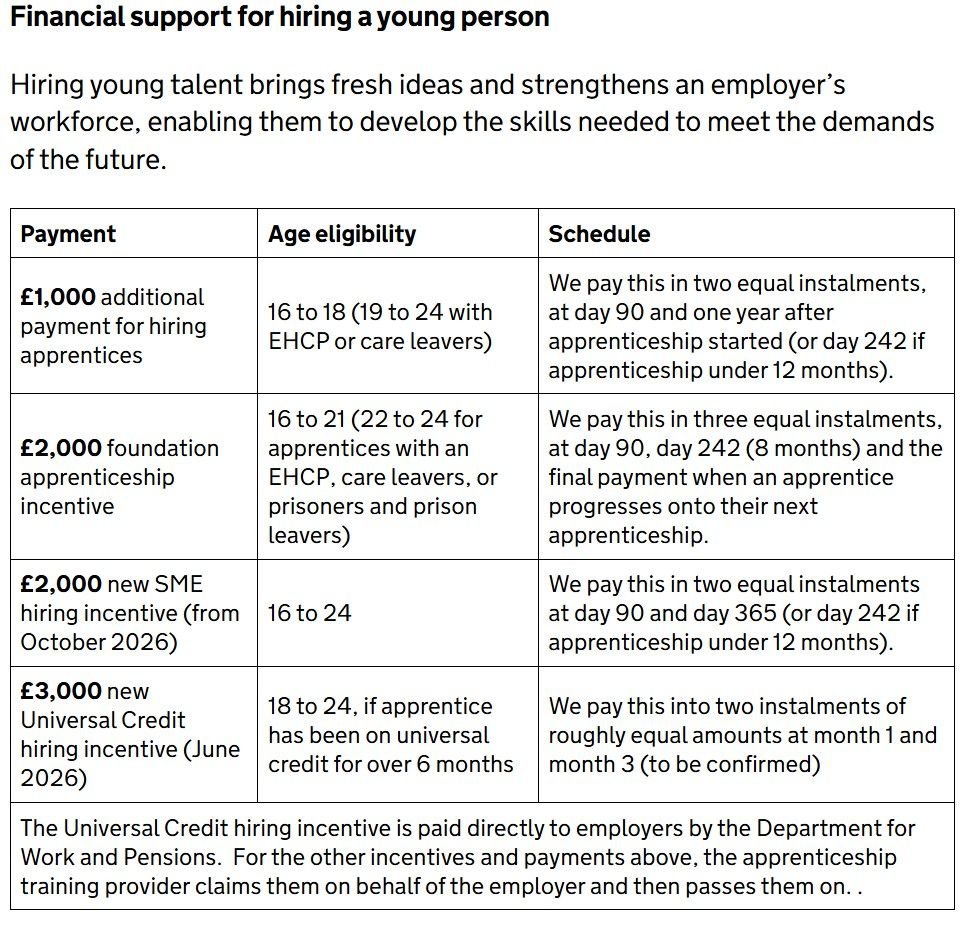
Financial support for employers when hiring a young person from the Apprenticeship Service.